

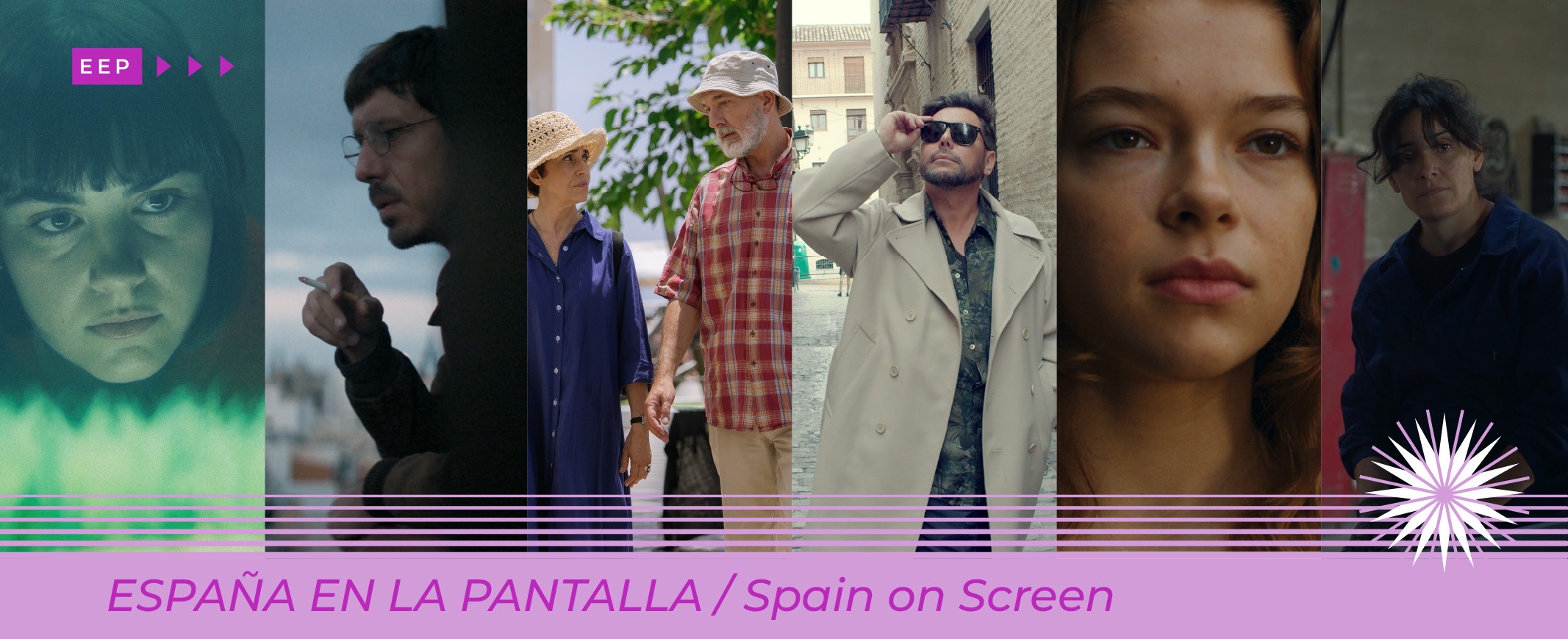
Six films reflecting the versatility of contemporary Spanish cinema arrive at the 41st Mar del Plata International Film Festival.
Spain on Screen offers a panorama of new Spanish cinema. The section brings together diverse voices, sensibilities, and aesthetic pursuits from that film tradition, with stories ranging from dark comedy to family drama, from genre cinema to documentary.
Azken Agurra, by Koldo Almandoz, follows the owner of a secular funeral company in the midst of a personal crisis. He has lost his license for drunk driving, fallen for an intern 25 years his junior, his daughter has begun questioning the image she had of him, and a retired boxer to whom he owes money is on his tail. Almandoz is a director, screenwriter, writer, and producer whose work moves between fiction, documentary, and essay film. His films have been recognized at festivals including Cannes, Rotterdam, San Sebastián, and BAFICI.
In Tralovento, by Eloy Domínguez Serén, Ana returns to her hometown after her father’s death, intending to leave right after the funeral. But a wind farm project divides the community and puts her family’s land at stake. As she gets drawn into the conflict, Ana reconnects with a community she had drifted away from and begins to reconsider her departure.
Ángeles González-Sinde directs Después de Kim, the story of Juan and Gloria, divorced and estranged for two decades. Both travel to Spain after learning of the death of their daughter, with whom they had lost contact. There they discover they have a grandson whose whereabouts are unknown, and finding him forces them to make the journey together and confront the conflicts of their shared past.
Mala bestia marks the feature debut of Bàrbara Farré, a director, screenwriter, and producer trained at ESCAC. Her short film La última virgen received, among other honors, the Biznaga de Plata and the Gaudí Award. The film introduces Atenea, a young woman living in a boarding school who clings to the idea of never growing up. When a couple decides to take her in, she finds the possibility of becoming part of a family — but the fear of being replaced awakens an instinct that could drive her to unimaginable acts.
In Enlorquecido: Solo el misterio nos hace vivir, singer Miguel Poveda travels through the places Federico García Lorca once inhabited to recover his memory, rediscover forgotten spaces, and explore the bond that connects him to Lorca’s work. Co-directed by Poveda and Manu Huelva, the film interweaves the artist’s personal search with the life and legacy of the poet. Lorca’s universe will also be present at the Festival through La bola negra, by Javier Calvo and Javier Ambrossi, which is part of the Winners from Major Festivals section.
The section closes with Casi todo bien, by Andrés Salmoyraghi and Rafael López Saubidet. Hilario works at a bookstore and teaches online writing workshops while collecting rejection letters from Spanish publishers for his novel. Caught between admiration for the classics and frustration with the publishing world, he meets a young woman in whom he believes he has found the inspiration he has always been looking for.
Six perspectives on the present of Spanish cinema, on the big screen in Mar del Plata.